Why Philanthropy Is A School For Inheritance
The article was originally published in Forbes Finance Council.

When business owners think about inheritance, the conversation usually starts with assets. How should wealth be transferred? Which structures will protect it? Who will eventually take over the business?
Those are important questions. But over the years, I’ve come to believe they’re not the most important ones.
The real challenge isn’t transferring wealth. It’s preparing someone to inherit it.
Before Wealth Changes Hands
Estate planning can determine who receives the assets. It cannot determine whether they will become responsible stewards of those assets. That part begins much earlier, through the values children grow up with and the examples they see every day.
Families often spend years designing structures to preserve wealth across generations. Far fewer spend the same amount of time thinking about how to preserve the principles that created it.
Those principles deserve to become part of a family’s legacy, just as much as its financial assets. They can even be reflected in long-term succession planning through documents such as a letter of wishes, a trust agreement or a family constitution. Documents alone will never shape character, but they can reinforce the values a founder hopes to pass on.
For me, philanthropy has become one of the most effective ways to do exactly that.
Why Giving Comes Before Investing
Many people see charitable giving as something that happens after success. I see it differently. I see it as one of the earliest opportunities to prepare future heirs for the responsibility that wealth brings.
The difference is that philanthropy offers children a safe place to start learning.
Before they are trusted with investment portfolios, businesses or family wealth, they can begin making thoughtful decisions with far smaller amounts. They learn that money is not simply something to accumulate. It is something to manage with purpose.
That may be one of the most valuable financial lessons they will ever receive.
The Rockefeller Formula
The Rockefeller family offers a remarkable example of this approach. John D. Rockefeller donated $540 million during his lifetime, an extraordinary amount for his era. Yet his greatest philanthropic legacy was not the amount he gave away. It was the culture he created.
Generation after generation, members of the Rockefeller family have continued to support charitable causes through foundations and philanthropic initiatives. Giving became part of the family’s identity rather than an activity reserved for one individual. In many ways, philanthropy became another way of teaching stewardship.
That idea resonates with me because I’ve experienced something similar in my own family.
A Lesson From My Own Family
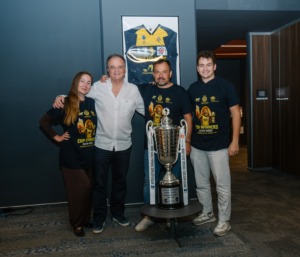
In 2016, I founded the Together Forever Foundation to help children with rare neurological conditions receive treatment at leading clinics around the world.
At the time, my goal was simple. I wanted to help families facing challenges no parent should have to face. Over the years, however, the foundation has become something much bigger than a charitable initiative.
It has become part of my family’s culture.
My children didn’t grow up hearing lectures about compassion or responsibility. They grew up watching those values put into practice. They have volunteered in the foundation’s activities, supported its initiatives and helped share its mission with others. Along the way, they discovered that giving isn’t a one-time act. It’s a habit. It’s a way of thinking about your place in the world and the responsibilities that come with opportunity.
The same thing happened inside my business.
When a company and a charitable foundation grow side by side for nearly a decade, people begin to understand that success isn’t measured only by financial results. Employees, partners and clients see the values behind the business, not just the business itself. Over time, philanthropy becomes part of the company’s culture rather than an occasional project.
The Legacy Beyond Wealth
I’ve come to believe that this is one of the greatest gifts parents can give their children.
Research has shown that family wealth is often lost within just a few generations. Financial planning matters, but I don’t believe money disappears simply because investment strategies fail. More often, it disappears because the habits, discipline and sense of responsibility that created that wealth were never passed on.
Teaching children to give isn’t separate from teaching them how to manage wealth. It is part of the same education.
One day, our children may inherit our businesses, our investments and our assets. Long before that day comes, they should have opportunities to inherit our values.
Because in the end, inheritance isn’t only about passing on wealth. It’s about passing on the judgment to use it well.